English
 русский
 Español
Tools & Technique
For most ceramic tile projects, a tile saw produces cleaner, straighter, and more accurate cuts than an angle grinder. A wet tile saw uses a water-cooled diamond blade guided along a fixed rail or table, which keeps the cut line consistent and minimizes chipping along the tile edge. However, an angle grinder — especially a cordless angle grinder fitted with a diamond blade — is often the better choice for irregular cuts, notches, small repair jobs, or situations where a bulky tile saw simply cannot be set up, such as cutting tile that is already installed on a wall or floor.
Direct Answer: Tile Saws Win for Precision, Angle Grinders Win for Flexibility
In short: choose a tile saw when precision and volume matter, and reach for a mini angle grinder when portability, tight spaces, or one-off cuts are the priority. The rest of this article breaks down exactly why, using real-world cutting scenarios, cost comparisons, and practical tips for getting clean results with either tool.
Why Tile Saws Are the Default Choice for Ceramic Tile
A wet tile saw is purpose-built for one job: cutting tile cleanly and repeatedly. Its water reservoir continuously cools the diamond blade, which reduces dust, prevents the blade from overheating, and lowers the risk of hairline cracks forming along the cut edge of ceramic tile. Ceramic is a relatively brittle material, and heat buildup from a dry cut is one of the most common causes of chipped or cracked edges.
Straight-Line Accuracy
Because the tile sits on a sliding table or fence, a tile saw keeps the blade tracking in a perfectly straight line. This matters most on large-format tile, where even a 1-2mm deviation becomes visible once the tile is installed and grouted. Professional installers doing floor or wall tile in bulk almost always default to a tile saw for this reason.
Repeatable Cuts for Large Jobs
If a project calls for dozens of identical cuts — for example, trimming an entire batch of tile down to the same width along a room's edge — a tile saw's fence and stop system lets you repeat the same cut with minimal setup time between pieces. An angle grinder has no such guide system built in, so repeatability depends entirely on the operator's steadiness and markup accuracy.
Where an Angle Grinder Outperforms a Tile Saw
Despite the tile saw's precision advantage, there are several real-world situations where an angle grinder is genuinely the better tool — not just a workaround.
Cutting Tile That's Already Installed
If you need to notch around a pipe, trim an edge tile after installation, or make a repair cut on a wall or floor that's already set, a tile saw is physically impossible to use in that position. A cordless angle grinder can be maneuvered freehand into these tight, fixed locations without needing to remove the tile first.
angle grinder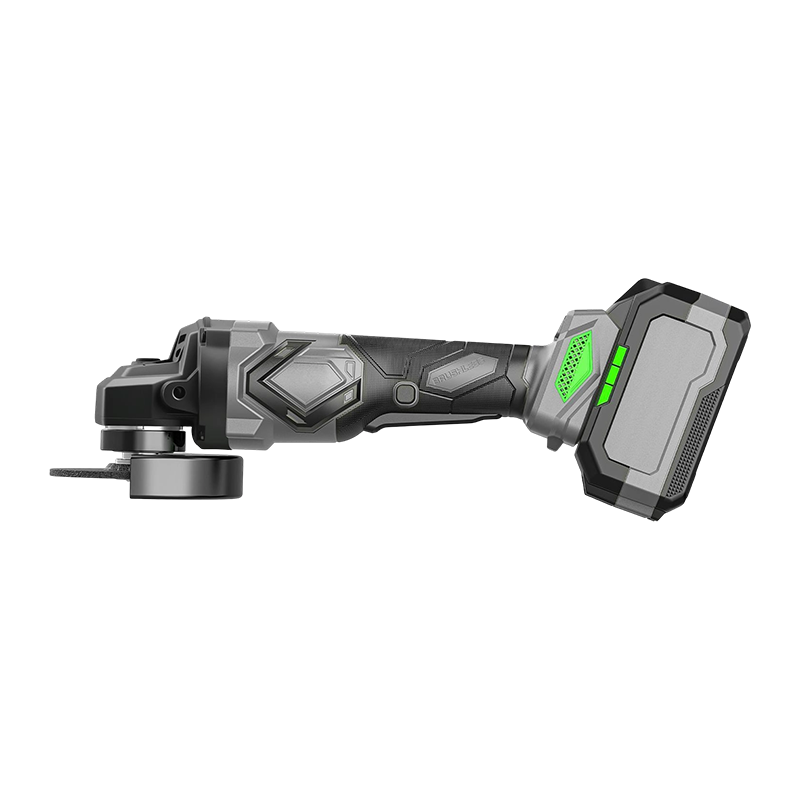
Curved and Irregular Cuts
Tile saws are designed for straight lines. For curved cutouts — around a toilet flange, a corner radius, or an L-shaped notch — a mini angle grinder with a thin diamond blade gives far more control, since the operator can freehand the blade along a marked curve in small, controlled passes.
A tile saw typically requires a stable surface, a water source or reservoir, and enough space for the sliding tray to move freely. An angle grinder needs none of that.
Portability and Setup Time
For a single repair cut or a small job on a jobsite with limited space, a cordless angle grinder can be ready to cut in under a minute, with no water setup and no need to haul a heavy stationary tool to the location.
Side-by-Side Comparison
The table below summarizes how each tool performs across the factors that matter most when cutting ceramic tile.
| Factor | Tile Saw | Angle Grinder |
|---|---|---|
| Cut accuracy on straight lines | Excellent | Fair, depends on operator |
| Curved or notch cuts | Poor | Good to excellent |
| Cutting installed tile | Not possible | Practical |
| Setup time | 5-15 minutes | Under 1 minute |
| Dust control | Very low (wet cutting) | High unless dust shroud used |
| Portability | Low | High |
| Best for large-volume jobs | Yes | Not efficient |
Cut Quality and Edge Finish
Edge quality is often the deciding factor for visible cuts, such as tile that meets a wall corner or a countertop edge. A wet tile saw's continuous water cooling and rigid blade guide typically produce an edge with minimal chipping, sometimes requiring no further finishing at all. An angle grinder, especially when operated freehand, tends to leave a slightly rougher edge with small chips along the glaze, particularly on harder porcelain-style ceramic tile.
That gap narrows considerably with practice and the right blade. A continuous-rim diamond blade rated for ceramic, combined with slow, steady grinder passes and light pressure, can produce an edge that's nearly indistinguishable from a saw cut once it's covered by grout or trim. Many experienced tile setters keep a mini angle grinder on hand specifically for touch-up cuts where a small edge imperfection won't be visible in the finished installation.
Cost and Accessibility
Budget is a practical consideration for homeowners and occasional DIYers. A basic wet tile saw typically costs several times more than an angle grinder, and many tile saws are also large and heavy, making storage a concern for anyone without dedicated workshop space.
An angle grinder, by contrast, is a tool most homeowners or contractors already own for other tasks like metal cutting or surface grinding. Adding a diamond blade turns an existing angle grinder into a capable tile-cutting tool without any additional major purchase. A cordless angle grinder in particular offers strong value here, since it doubles as a general-purpose tool for dozens of other jobs around a home or worksite, unlike a tile saw, which has a single dedicated function.
Success
- If you're cutting more than 20-30 tiles for a full room installation, a tile saw pays for itself in time saved and reduced waste from miscuts.
- If you're making fewer than 10 cuts for a small repair, backsplash patch, or single-room touch-up, an angle grinder is usually the more cost-efficient choice.
- If storage space is limited, a mini angle grinder takes up a fraction of the space a tile saw requires.
Safety Considerations for Each Tool
Both tools carry real risk if used incorrectly, and the type of risk differs meaningfully between them.
Tile Saw Risks
Warning
The main hazards with a tile saw are kickback if the tile binds against the blade, and electrical safety around the water reservoir, since these are wet-cutting tools plugged into standard outlets. Using a saw with proper GFCI protection and keeping hands clear of the blade path significantly reduces risk.
Angle Grinder Risks
Danger
An angle grinder spins at very high RPM with no fence or guide holding the workpiece, which makes disc grab and kickback more likely if the blade binds mid-cut. Eye protection and a dust mask are essential, since dry-cutting ceramic tile with a grinder produces significant fine silica dust. Many professionals attach a dust shroud to their angle grinder specifically for tile work, both to control dust and to improve visibility of the cut line.
Practical Tips for Cutting Ceramic Tile With an Angle Grinder
If you decide an angle grinder is the right tool for your job, a few techniques make a noticeable difference in cut quality:
Info
- Use a diamond blade rated specifically for ceramic or porcelain, not a general masonry blade.
- Mark the cut line clearly on the tile face with a marker before starting.
- Make a shallow scoring pass first, then deepen the cut in two or three light passes rather than forcing it through in one.
- Support the tile firmly on both sides of the cut line to prevent snapping or chip-out.
- For repeated cuts on a jobsite, a cordless angle grinder avoids the hassle of running an extension cord across a work area.
For detail work like notching around outlets or pipes, a mini angle grinder with a narrow blade offers better control than a full-size unit, since its lighter weight and smaller disc diameter make it easier to follow tight curves accurately.
Which Tool Should You Choose?
The right choice comes down to the scope and location of the job rather than one tool being universally "better." For a full tile installation with dozens of straight cuts, a tile saw remains the more efficient and precise option, producing consistent results with less operator skill required. For repairs, notches, curved cuts, or work on tile that's already installed, an angle grinder — particularly a cordless angle grinder for jobsite flexibility or a mini angle grinder for tight detail work — is the more practical and often the only workable choice.
Many experienced tile installers actually keep both tools on hand: a tile saw for the bulk of straight cuts during installation, and an angle grinder ready for the inevitable notch, repair, or on-the-fly adjustment that a stationary saw simply can't handle.
Choosing based on the specific cut in front of you, rather than picking one tool for the entire project, consistently produces the cleanest and most efficient results.